
Shopping disclosure: Some links on this page are affiliate links. If you purchase through them, Boomers Discover may earn a commission at no extra cost to you. Unless stated otherwise, this is researched editorial content, not a hands-on product test.
First, a note about “best”
The best rebounder is the one that fits your balance, room, budget, and willingness to use it. I don't think a universal winner makes sense without comparing specific current models and testing them. Instead, this guide compares the types of mini trampolines you're likely to encounter and the features that matter most. We'll add verified model-by-model picks when the product details and availability have been checked. That is more useful than handing out impressive-sounding awards to equipment we haven't tested.
Quick comparison: which design suits you?
| Design | Potential advantage | What to watch |
|---|---|---|
| Bungee rebounder | Often a quieter, softer-feeling bounce | Replacement cord availability and tension |
| Spring rebounder | Often familiar and widely available | Noise, exposed hardware, firmness |
| Model with handlebar | Something to hold while learning balance | Bar stability and correct installation |
| Folding model | May store more easily | Locking mechanism and setup effort |
| Larger-diameter model | More standing room | Greater floor-space needs |
Best for a beginner: prioritize stability over bounce
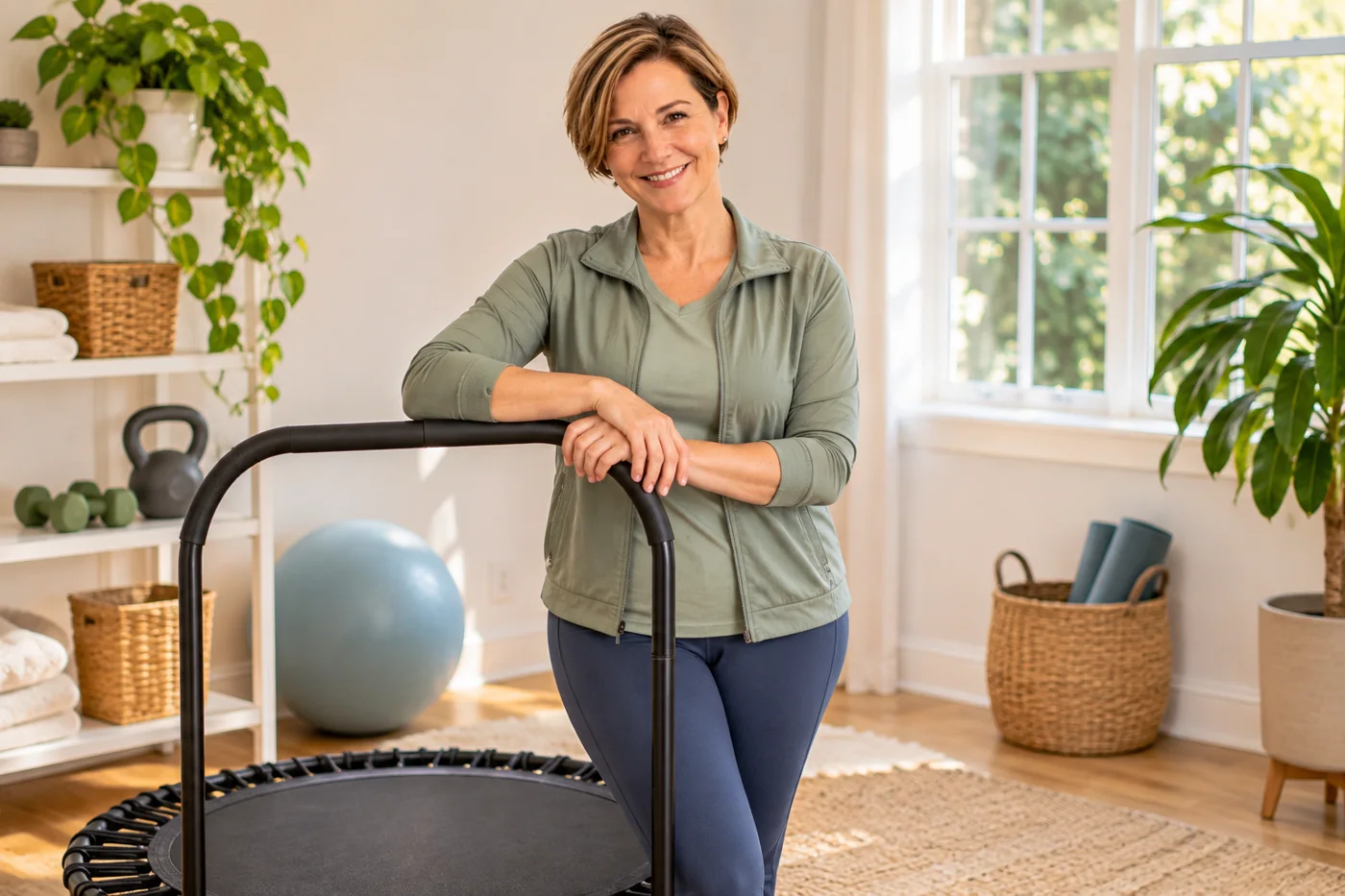
For someone who hasn't used a rebounder before, a solid frame, secure legs, and generous mat area matter more than how high the mat can launch you. Look for clear manufacturer weight ratings and assembly instructions. A model with a properly designed support bar may be appealing if you want something to hold, but it does not eliminate fall risk. If standing on a springy surface already feels uncomfortable, a rebounder may not be the right exercise equipment.
Best for a shared living space: consider sound
If your exercise corner is near a living room or apartment neighbor, ask about sound. Springs may squeak and bungee systems may feel quieter, though real-world noise depends on the specific product, floor, and assembly. A floor mat may protect surfaces but should not make the rebounder unstable. Read verified owner feedback about squeaks that develop after months of use, not just how quiet a new unit seems.
Best for small spaces: measure twice
A compact rebounder can still occupy more room than its advertised diameter. You need space to step on and off, clearance from furniture, and room above your head. Folding sounds convenient, but check whether the model can be folded without tools and whether doing so is realistic for you. If the rebounder is difficult to set up, it may end up tucked away instead of used.
What I would compare on any two product pages
- Frame diameter and actual jumping surface
- Maximum user weight, from the manufacturer
- Overall height and floor clearance
- Spring or bungee construction and replacement parts
- Handlebar availability and installation
- Warranty, return policy, and assembly requirements
- Customer feedback about stability over time
What about the rebounder featured on Boomers Discover?
We've already highlighted a mini trampoline in our gentle rebounding feature. It's a useful starting point for browsing, but I would verify the listing's exact frame size, weight rating, and included accessories before calling it a best pick. If you're comparing it with another model, use the checklist above rather than relying on the listing headline alone.
A few safety considerations that matter
Rebounding requires balance. Begin with small controlled movements and follow the manufacturer's instructions. Keep the area clear, check the frame before each session, and don't bounce while distracted. Anyone with significant balance issues, dizziness, recent surgery, or a history of falls should consult a qualified professional before trying it. Claims that bouncing “detoxes” the body or treats disease aren't a reason to buy equipment.
My take
I like fitness equipment that invites a few minutes of movement without making the day complicated. But the best mini trampoline is not necessarily the bounciest or cheapest. It is the one you can get on and off safely, feel confident using, and store without frustration. Choose for your real home and real body, not the workout video.
How to compare actual models without falling for a flashy listing
When I look at rebounder listings, I start with the details that can be checked rather than phrases like professional quality or gym grade. Find the manufacturer's stated weight limit, the overall frame diameter, the size of the usable jumping surface, and whether the support handle is included. Check whether the feet are designed for your flooring and whether replacement bungees or springs are sold. Two models can look almost identical in photographs and still have very different setup requirements.
A useful comparison worksheet
For each rebounder on your shortlist, write down the price, diameter, weight capacity, spring or bungee design, included handle, folded dimensions, warranty, and return terms. Give yourself room to note any missing information. If the listing does not explain how the handle attaches or what replacement parts cost, that is a reason to ask before ordering. I would rather buy a simpler model with clear documentation than a complicated one with promises but no practical details.
The handlebar question
A handle can feel reassuring, especially when you are learning the movement, but it should not be treated as a guarantee against falling. Check whether the handle adjusts to a comfortable height and whether the manufacturer explains how to secure it. Some handles are meant for light balance assistance rather than supporting full body weight. That distinction matters. If you need a device that supports significant weight while standing, speak with a qualified professional about a safer option.
Where will you actually put it?
Picture a normal Tuesday, not your most motivated day. Will the rebounder stay set up in a spare room, or will you have to unfold it and move furniture each time? Measure the clear floor area and the ceiling height. Allow room to step off safely. Consider sound if you live in an apartment or share a room. A compact exercise tool is only convenient when it fits the space you have, and folding is only a benefit if you can manage the mechanism comfortably.
Frequently asked questions
Are bungee rebounders always better than spring models?
No. Bungees often have a softer and quieter reputation, but quality and feel vary by model. Compare construction and user feedback.
Do I need a handlebar?
Not everyone does. If you want one, confirm its intended use and attachment method. A handle does not remove the risk of falling.
Can I start with jumping?
Start with the manufacturer's beginner instructions and gentle, controlled movement. If balance is a concern, get individualized advice before using a rebounder.